Monday, 7 April 2014

Easter jobs, and that

Here are a few resources to help you out while you are completing revision notes on all of the main characters, and the themes. I know you can use Google and all, but still. First up is sparknotes – accessible and informative; I know a boatload of you have used this before. BBC Bitesize is also a classic, too.  One you might not know about is Universalteacher – this has great advice about writing about Shakespeare (don’t introduce your quotes!), but make sure you ignore the stuff about the exam and codes and stuff right at the top. Any problems, drop me a line and I’ll reply sooner than you think (I reply to kid emails as soon as I get them, unless you have chosen to boot yourself off the list…).
I’ll put up some paper 1 reading stuff around this time next week, although between now and then, have a look at what Geoff Barton says is some of the best writing on t’interweb. Have a nice Easter!


Oh, and the first person to email in and tell me what the picture is, and what book it relates to wins a tasty confectionery item of their choice – GUARANTEED.

Tuesday, 18 February 2014

Curley's wife

If you need the link for the questions I have set - you can find them here. I'm doing this on my computer (not my work one), so if anyone wants to post the helpful links in the comments below then you'll win all sorts of prizes. (By all sorts of prizes I mean anything I can pinch off McDermott's desk). Any probs - let me know via email; because I'm a friendless loser they come through to my phone, so you'll often get a response quicker than you think. In other news, Pickin and Lawrence win the Y1 speed awards, with some frankly spiffing answers from the pair of them. Finally, have a picture of my dog reading a book. You're welcome.

Friday, 24 January 2014

Reading practice - WOOOOOOOO

I've spoken to you at length about how the reading section was a bit weaker than the writing section in the mock - but not to worry, as it is easy to fix with a bit of practice. Click here for the first of much reading practice - just make sure you understand the difference between the 'why' question and the 'how'.
Tips - for the 'Why' question use lots of short quotes, from all over the text. For the how question, use the S /M/ L model - if you aren't sure about this then give me a shout and I'll go over it again.
I'll collate the answers on Thursday at 4pm, so get it done before then or you'll go down as not having done it.
Otter suggestion courtesy of Luke - well in, Luke.

Friday, 22 November 2013

Literature essay guidance

Here you go - I've emailed it out, but I'm aware some of you sometimes have trouble accessing school emails. In true belt and braces fashion, you can find the guidance here. Just remember to download it locally. Don't forget - come and see me after school or at lunch in L7 if you want me to check anything.

Saturday, 9 November 2013

Equality in a capitalist society?

Have a look at this - an infographic roughly outlining the difference between left and rightwing viewpoints. Just for reference, we live in a capitalist society (generally the blue side), which is often concerned with creation of wealth, although there are a lot of aspects from the red side that you might recognise in our society, too (it's not a perfect division). Question for you then - is genuine equality possible in the society we live in? What about America in the 30s?

Essay guidance

Here you go kids - the guidance for what an English essay looks like here. Have a read of this, paying special attention to the  part about outlining your argument in the introduction, and then spending the rest of the essay justifying that view whilst comparing the texts. 

Anyhow, back to the essay. The title is

"We hold these truths to be self-evident, that all men are created equal, that they are endowed by their Creator with certain unalienable Rights, that among these are Life, Liberty and the pursuit of Happiness." Compare representations of equality in Lee's 'To Kill a Mockingbird', and Steinbeck's 'Of Mice and Men'. To what extent has contemporary society learned the lessons the authors may have trying to teach us?

Have a look at the essay guide, and then have an idea of what your argument will be, ready to complete the introduction on Monday. Once you've done this, planning the essay will be a walkover. 

Friday, 27 September 2013

Last minute advice

A fair few of you have been to see me, so here is some last minute advice and reassurance. First of all, don't worry too much about this! We obviously want you to do well, but if you get anything wrong, it's not the end of the world, and we'll make sure that you know how to avoid making the same mistake in the future - what with it being our jobs and all. So, take a deep breath, make sure you follow the guidelines, and you'll be fine.

1. Plan. Spend the first ten mins collecting your ideas, answering the question in your head, going over the extract, using the toolkit (that I've pictured here), picking out quotes and linking ideas together. You might see kids who have written a side in the first ten minutes; that doesn't matter. Plan. Do all your thinking now, so that you'll avoid all that thinking whilst writing I want you to avoid. Plan it over one side, maybe two, but make sure you put a single line through it to show that it is a plan.

2. For the second half of the TKAM question, choose your extract carefully - make sure it answers the question you have been asked! Once you've picked your extract (make sure it isn't too long or short), simply analyse it in the same way that you analysed the first.

3. At the end of every paragraph, just check that it answers the question you have been asked. If you've planned properly this shouldn't be an issue, but it won't hurt to check.

4. Check out the model answers. We'll do more of these later on, but you kids are throwing your sizeable intellect at this question like it is a Literature exam, and it's not. Check out the models I've given you or provided you with online, and make sure your answer looks like an exemplar language response, not the model Literature responses you all gave me in the baseline assessment.

5. Don't forget the basics on the written section. You're all really, really able pupils, so make sure that you don't include any mistakes that suggest you aren't. Apostrophes and capital letters are standard, so make
sure you use them. Any problems with the apostrophes, then check this out.

Questions? Comments? Bell & Ross watches? All welcome - send them in to the usual address.

Wednesday, 25 September 2013

Past papers, exemplars, that kind of thing

Afternoon all – Like every year, I'm starting to get a lot of requests from parents (and students) for past papers, mark schemes, exemplar answers and the like. This year I thought I’d save everyone a lot of time and point everyone to the publicly accessible part of the Edexcel website, where you should be able to find all of these, and more. A word of warning though – the site isn't the easiest to navigate, so just remember that you need to look at the resources under “Unit 2 – The Writer’s Voice – 5EN2H. (I've just checked and noticed that there are two of these headings – open the second one for all the really good stuff). If you are in 11x1 or 11y1 you will be completing the higher paper, and the exam is Unit 2 of the course (you've already completed units 1 & 3), and you only need to worry about the ‘To Kill a Mockingbird’ questions in the first section (and the writing section, obviously). 
Hopefully this will be all you need, but if you run out of past papers or exemplar answers then come and see me; there are a few kicking around the department that I'm not allowed to host here (because they’re still in copyright).
If any parents would like to be added to a mailing list to notify them when the English blog updates, then you can let me know your email address here. ( The first five pupils on that list will immediately become ClubClass members, so there's an incentive to show your folks...)
I’ll update tomorrow with a few things to remember before the exam; don’t worry though, it’s nothing we haven’t done in class.

Finally, I'm still a little unsure about hosting an anonymous markbook, but loads of you seem to be quite keen. I’ll put it to a vote, which you can find on around the top right of your screen.

Tuesday, 9 July 2013

Yes Arnold bros

Morning all! It was lovely to meet you yesterday, and I'm sure the next year will be plenty o' fun. I thought I'd draw your attention to some of the things that we covered yesterday, and let you know generally how I operate my classes.

First up - the seating in there made me ROFL. I'll move you, and I make you this bet now; you'll end up having more interesting, in depth conversations about the text with people you might not normally chat to then if I just parked you with your mates. If that's not true by Christmas, I'll bring in more Minstrels then you could conceivably eat. And then I'll eat them all myself, because you'll have all lost.

Second - the book. I recommend picking up your own copy of the text, so you can annotate and scrawl and put post it notes all over (you'll be given a clean copy for the exam). ) Different types of study guide are available, too, and it would be useful if between you you all picked up a variety (although only buy one each, obvs), so could swap them around between yourselves. I'm aware that I'm suggesting buying a few books here, so if your pocket money will only stretch to a few Beyblades, then check out any number of the online study guides, which rock in at £0.00. I'll put this bluntly: kids who read study guides get miles more marks then kids who don't.  For the kids who are really gunning for the top end stuff, then I recommend this; we'll be using extracts from it in lessons, and it's the one that will make your brain hurt the most. If you want to pick up a copy, I thoroughly recommend the £0.01 option, where you only pay for postage.

Third - reading. I'll be pushing reading non-stop. What often happens is kids often drop off reading round about year 9, and it often doesn't get picked up again. I'll release a recommended reading list for Y11 as soon as I've had a chat with Mrs Cassidy - no point releasing a list of books that the library might not have. Since this is extra curricular, I'll aim to reward this as much as I can - watch this space.

Fourth - Mabel wins the inaugural 'Prize of Skillness', for leading the discussion on the characters. We'll work on ways to lead these discussions (what questions to ask, how to get people involved and so on), and the majority of people will have done one by Christmas. The prize will be whatever confectionery I can steal from Eatherington's desk.

Finally - I'll host as much as I can here - course overviews, an anonymous markbook, resources... you name it. Any particular requests, then let me know.

Any questions / problems, then send them to my school email address. Don't bother with the Gmail one as that never gets checked.

Cheers!

P.S - test on Chapters 1-8 on Monday. Oof.


Tuesday, 20 March 2012

It's been a while...

Hmmm, can we see oppositional structure here?
I'm sorry - you've probably been crying every night, pawing at your screens, saying "Why? WHYYYYY hasn't he updated? WHHHHYYYYYYYY?", and then going back to your lolcats or Beyblades, or whatever you youngsters do for fun.
Anyways, expect to see a good few updates before the year is out, starting with this one, that includes your homework!

So, in the English workroom (cue lightning flashes, thunderclaps, howling wolves etc) we decided that one of the things we should make you explicitly aware of is the number of terms that we expect our C and above candidates to use. To this end, we jotted down a list of terms that we reckon you should be aware of, and ideally be able to use in your Eng Lit exam. You can find that beast here. So, what we want you to do is to pick ten - any ten at all. Find out what they mean, and then, think about how they might be related to any of the texts that we have studied so far (treat each poem as an individual text). After that, try to write a sentence about a text that includes the definition that you have been studying. If you want, you can fill in this form here (make sure you download it locally to your machine first, mind - File-Download, or just press Ctrl+S).  I'd also like you to get your two best examples, and include them on this open edit document. (Although it looks the same, you should find you can edit and change this one. Don't worry if your term has already been done; the more examples the better!)

Any problems, then drop me a line or come and see me. This is due in Monday 26th, but if you email me at 11pm on Sunday night then you might be out of luck...


Friday, 27 January 2012

A Level?

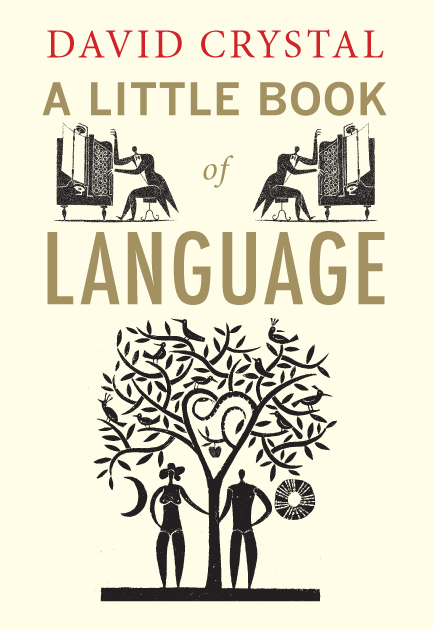
If you are thinking about A level language for next year, and you've got a few spare minutes kicking about now you have finished your exams, then you might want to check out this book - David Crystal's 'A Little Book of Language', and it's in the library (I've also got my own copy if anyone wants to borrow it). It's written by David Crystal, who is really famous in English language circles, and it is really, really easy to understand.

It gives an introduction into nearly all of the topics that you'll study at AS (such as how people use language when they use technology, how men and women use language differently, how people use language to show they are in charge, or to exclude people from a particular group.... I could go on, but you get the picture).

I don't want to go on, lest I bore you, but trust me - if you want a flavour of what A level language looks like, then check it out.

Thursday, 19 January 2012

An Inspector Calls - Introduction

Since we'll be looking at 'An Inspector Calls', a useful starting point might be to explain the difference between left and right wing viewpoints, and the ideas behind  them. Although this infographic isn't perfect, it does give us a good starting point for discussion. Have a look at this, and see if you can start to see any of Arthur Birling's ideas represented here (or the Inspector's, for that matter). If you struggle to read the infographic, then it will be worthwhile checking it out on the original website, that can be found by clicking here.

Thursday, 1 December 2011

GCSE Mock! Woop woop

I'm taking a quick break from marking all of your papers, so I thought I'd write a quick post. First of all, the timings are a bit of an issue for some of you, so you can have the timings sheet that I've typed out here.
Secondly, don't worry about any mistakes that you might have made in the mock - I'm glad you've made them now, so I can point them out and you'll be well aware of what not to do come January (almost like the WHOLE REASON for having a mock...).
I'll have your marks for next Thursday, and (along with your CA marks), I'll be able to tell you not only your exam grade, but what you would have achieved over the whole course if your exam had been real.
Enjoy!

Friday, 4 November 2011

Quick change of homework

The amazing idea I had for homework (where you each add examples of language devices to a document) sounded great when I planned it out, but is, unfortunately, rubbish in real life, or definitely need a fair amount of tweaking. So, your new homework is to look over the non-fiction and media pack I previously posted; you can find it here

Enjoy!

Tuesday, 25 October 2011

Non fiction glossary

Here is the survey about the non fiction glossary I gave you - fill this beast in here. The more of you do it, then the more I'll know about what to go over in class.


By the way, if you've left the guidance sheet in school, or lost it (grrrrr!) then you can find a replacement here.

GCSE English Language guidance

If the combined thrills/spills/chills of Youface and Mytube aren't taking up enough of your half term, than I humbly suggest you give up half an hour and check out this guide to non fiction and media texts, straight from the Englishbiz website (the link is on the right). Long story short - this Steve Campsall guy really knows his onions (any of you picking Language next year will see a lot more of him), and having a look over it now won't do you any harm at all before we start the non fiction unit. Get involved!


Coursework Info

Having recently collected in the film review, I'm now within spitting distance of having a completed marksheet for all your coursework. I've been aware for ages that parents like to know how their kids are going on, so I've been thinking of posting it up here. Before anyone freaks out, I'll replace your names with random numbers (which I'll give to you individually) so nobody can find out marks that aren't theirs. If anyone isn't happy about this (and that includes parents), let me know. Questions, comments, Bell & Ross watches to the usual, please!

GCSE Exam

Just a quick note for you and your parents - the GCSE English Language is on the 10th January 2012, starting at 9am.

Thursday, 6 October 2011

Reviews

Right then folks - your final bit of coursework will be to complete a film review of 'To Kill A Mockingbird'. In order for us to do this, you'll need to have a really good knowledge of how film reviews work.

So, to start with, you'll need to find a bunch of film reviews (round about three will be enough), ideally on the same film. So, you can go to dedicated film review sites like www.rottentomatoes.com, or general review sites like www.metacritic.com. These are blocked by school though, so look at other sites, such as www.empireonline.com, or even newspaper sites (although tabloid reviews will be a little short and simple for our purposes, although it won't hurt to look at them). Create a special folder in your English folder, and save a bunch of reviews there. When you come to  me on Monday, I'll want you to have printed at least two - but feel free to work with your mate(s).

If you get fed up with this, and fancy something different, then I'd like the old favourite - a graph! Venn diagram, line graph, you name it - I need a load to redo the display in my room, and you pack of monkeys are going to help. If you find Excel a little rough going, then you might want to check out some of these sites you can find out here. Some sort of immunity badge will be the prize for the best one, although you don't have to do this for your homework; your homework is to bring me some reviews on Monday.

Any problems / questions / Patek Philippe watches - send them to the usual address

Thursday, 8 September 2011

Jobs / news / congratulations etc

Just a quick post to let you know how pleased I am with the reading effort you all put in over the break - special mentions also go to McEwen and Clamenza for scoring 1st and 2nd places in the test, respectively (particularly in the light of some fairly steep marking - I'm looking at you, Armstrong). As you've read the whole text, the next couple of weeks will be fairly straightforward.

I'll give you a photocopied work pack on Tuesday (13th), and I'll expect it in and complete by Thursday 22nd - it's really important that this is done well, as you'll need it for your revision at the end of the year. I certainly don't expect you to print out the whole pack (I'll have a mob of angry parents / Mrs Rogers chasing me if you do) - you can simply replace or stick in any pages that you might have completed previously. I'll give you a lesson and a homework to get it all done, which I reckon will be plenty.

Also helpful when studying the novel are various study guides that are floating about - the Sparknotes ones are pretty good, and so are the thebestnotes.com ones. You can also check out the Novelguide notes, too.

Whilst the above guides have the benefit of being free, I find reading off a monitor hurts the peepers after a while, so if you fancy busting out a few pounds (although do look at the used prices; you often only have to pay the postage), you might want to check out one of the many printed study guides that are available - Yorknotes, Letts and Cliffs notes are all worth a look - but remember, you only need one (ideally different from one that your mate might have got, so you can swap if needs be). I haven't seen this one (although it has fairly decent reviews), and this one might be worth a look if you are gunning for your A*. I'm going to be brutally honest here - kids who read study guides (either books or off t'interweb) get better marks than kids who don't. Simple as. In any case, I'm guessing the majority of you will be in higher education in a year from now, so it won't do you any harm to start getting used to the idea of reading around a subject to better understand it.

Any questions / comments / large cheques etc - send them to the usual address.

Parents - my email has now changed; you can contact me at d.nevin@southnottinghamshireacademy.org

Cheers!